IPTV Canada: Everything You Need to Know Before Subscribing
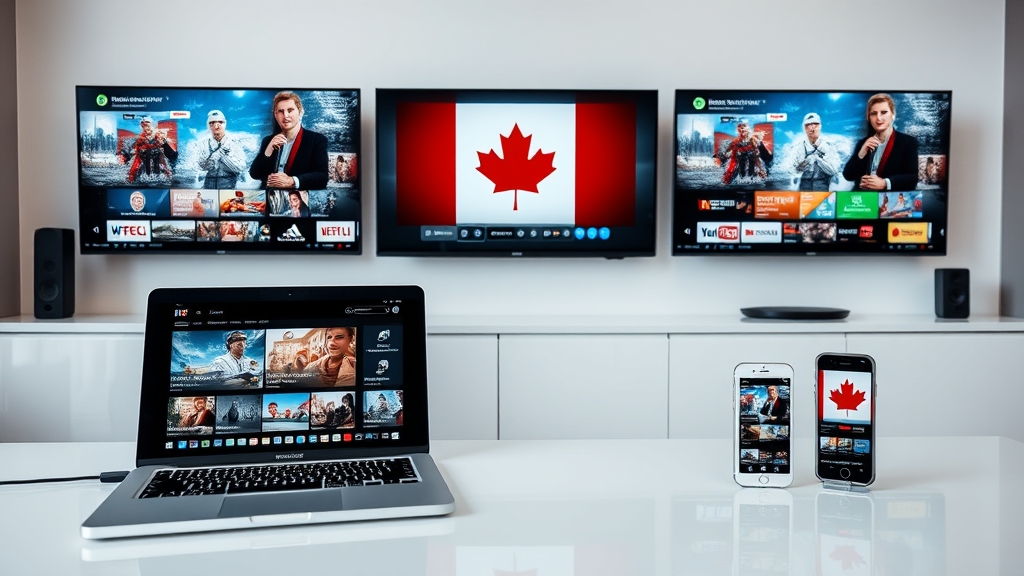
IPTV stands for Internet Protocol Television. Strip away the jargon and it means watching television through your internet connection instead of through a cable wire or satellite dish. It is not a new concept — Bell Fibe TV and Telus Optik TV are technically IPTV services, delivering their TV signals over internet infrastructure rather than traditional coaxial cable. The difference is that independent IPTV providers do the same thing at a fraction of the cost, without the contracts, without the equipment rental fees, and with vastly more content.
If you are a Canadian considering cutting the cord, or you have already cut it and are looking for something better than juggling four streaming apps, this guide covers everything you need to know before you subscribe to an IPTV service.
How IPTV Actually Works (In Plain English)
Traditional cable sends a bundle of analogue or digital signals through a physical cable to a set-top box in your home. Satellite does the same thing via a dish pointed at a geostationary satellite. Both methods are decades old and come with inherent limitations — they require dedicated infrastructure, physical installation, and expensive hardware at both ends.
IPTV takes the same television content and encodes it into data packets that travel over the internet. When you tune to a channel, your device sends a request to the IPTV server, which streams that specific channel's data to your screen in real-time. It is functionally identical to how Netflix or YouTube works, except you are watching live television channels instead of on-demand videos.
The practical result for you as a viewer in Toronto, Calgary, Halifax, or anywhere else in Canada is simple: if you have a decent internet connection (25 Mbps minimum, 50 Mbps or higher recommended), you can watch live TV on any internet-connected device without a cable box, satellite dish, or technician visit.
How IPTV Differs From Cable, Satellite, and Streaming Apps
Understanding where IPTV fits in the landscape helps you make a smarter decision. Cable TV (Bell, Rogers, Cogeco, Shaw) requires physical infrastructure to your home, a set-top box rental, and typically a 12 to 24-month contract. You get a curated selection of channels — usually 100 to 300 depending on your package — at a price that ranges from $65 to $150 per month once you have added sports and movie tiers.
Satellite TV (Bell Satellite) requires a dish installation, similar hardware costs, and comparable pricing to cable. Its main advantage has traditionally been availability in rural areas where cable infrastructure does not reach.
Streaming apps (Netflix, Disney Plus, Crave, Amazon Prime Video) are on-demand libraries. They are great for movies and series, but they do not replace live television. You cannot watch a live Raptors game on Netflix. You cannot tune into the CTV Evening News on Disney Plus. And subscribing to all the major streaming services (Netflix at $17, Disney Plus at $12, Crave at $20, Amazon Prime at $10, Paramount Plus at $7) adds up to $66 per month before you have watched a single live channel.
IPTV combines the live channel experience of cable with the device flexibility of streaming apps. You get thousands of live channels — including every Canadian network and sports feed — plus massive on-demand libraries, accessible on any device, for $5 to $8 per month. For a detailed look at how the costs stack up, check out our IPTV vs cable comparison.
What Devices Run IPTV in Canada
One of the biggest advantages of IPTV over cable is device flexibility. You are not locked to a proprietary set-top box that sits under your television. IPTV runs on virtually any internet-connected screen you own.
The most popular device among Canadian IPTV users is the Amazon Firestick. It costs $50 to $70, plugs into any TV's HDMI port, and runs all major IPTV apps smoothly. The Firestick 4K Max is the preferred model for its processing power and 4K capability. Our Firestick setup guide walks you through installation step by step.
Android TV boxes (like the NVIDIA Shield or Formuler Z11 Pro) are popular with users who want a more powerful dedicated streaming device. They offer more storage, faster processors, and ethernet ports for wired connections that reduce buffering risk.
Samsung and LG smart TVs from 2019 onwards run IPTV apps natively through their built-in app stores, meaning you do not need any additional hardware at all. Check our Smart TV setup guide for instructions specific to your TV brand.
Beyond those, IPTV works on iPhones and iPads via iOS apps, Android phones and tablets, Windows and Mac computers through dedicated apps or VLC media player, and Apple TV devices. Most providers allow multiple simultaneous connections, so your household can watch different channels on different devices at the same time.
What Channels Do Canadians Actually Get?
A legitimate question, especially if you are used to a cable package where you know exactly what you are getting. A quality IPTV provider serving the Canadian market should include the following as a baseline.
Canadian networks: CBC, CTV, Global, City TV, CTV2, and regional affiliates from major cities. French-language networks: Radio-Canada, TVA, V, Noovo, and specialty French channels. Sports: all five TSN feeds, all Sportsnet regional feeds (Ontario, Pacific, West, East), Sportsnet One, Sportsnet 360, RDS, RDS2, and TVA Sports. Premium: Crave-affiliated channels, Super Ecran, Hollywood Suite, and Starz. US networks: ABC, CBS, NBC, FOX from multiple affiliates, plus CNN, MSNBC, Fox News, ESPN, and hundreds more.
Beyond North American content, most providers include thousands of international channels spanning the UK, Europe, the Middle East, South Asia, East Asia, Africa, and Latin America. For a country as multicultural as Canada, this matters. Browse our complete channel list to see exactly what is included.
How to Pick an IPTV Provider (Without Getting Burned)
The IPTV market in Canada is crowded, and not every provider deserves your money. Here is what to evaluate before subscribing.
Server reliability comes first. A provider can list 50,000 channels, but if their servers crash every evening during prime time, those channels are worthless. Look for providers who maintain servers in Canadian data centres — ideally in Toronto, Montreal, and Vancouver — to minimize latency for domestic viewers.
Channel quality matters more than channel count. A provider with 20,000 channels in consistent 1080p is vastly better than one advertising 40,000 channels where half of them are dead links or 480p feeds from 2015. Test before you commit. Any reputable provider offers a 24-hour trial or a short-term plan so you can evaluate stream quality during peak hours.
EPG (Electronic Program Guide) quality is the difference between a polished TV experience and a frustrating one. A good EPG shows current and upcoming programming, channel logos, and program descriptions. A bad one shows nothing or has data that is days out of date.
Customer support response time tells you everything about how a provider treats its customers. Send a test message to their support before subscribing. If it takes 24 hours to get a reply when you are a potential customer, imagine how long it takes when you are already paying.
Payment methods are a practical consideration. Look for providers that accept Canadian payment methods and price in CAD. Having to pay in foreign currency through sketchy payment processors is a red flag.
Getting Started With IPTV in Canada
The setup process is straightforward. Choose a provider and select a plan — most offer monthly, quarterly, and annual options. You receive login credentials (typically a username, password, and server URL) within minutes of payment. Install an IPTV app on your preferred device. Enter your credentials. Start watching.
The entire process from signup to watching your first channel takes under fifteen minutes. No technician visit. No drilling holes in your wall. No waiting two weeks for an installation appointment. Visit our installation guide for device-specific setup instructions, or jump straight to our pricing page to see current plan options.
The Canadian IPTV Landscape in 2026
The CRTC has been slowly adapting its regulatory framework to account for internet-based television delivery. Traditional broadcasters like Bell and Rogers continue to lose cable subscribers — Bell reported a decline of over 100,000 TV subscribers in their most recent fiscal year. The trend is accelerating, not slowing.
For Canadian consumers, this shift means more choices and better value than ever before. IPTV is no longer a niche hobby for tech enthusiasts — it is a mainstream television solution used by hundreds of thousands of Canadian households from St. John's to Victoria. The technology is mature, the content is comprehensive, and the savings are substantial.
Ready to Start Streaming?
Join thousands of Canadians enjoying premium IPTV with 19,000+ channels.
Related Articles
 Guides
Best IPTV Service in Canada 2026 — Complete Buyer's Guide
Canadians are fed up with cable bills north of $120 a month. Here is what actually matters when choosing an IPTV provider in 2026 and how to avoid the junk.
Read More Guides
What is IPTV and How Does It Work? Simple Beginner's Guide
New to IPTV? This beginner-friendly guide explains what IPTV is, how it works, and why millions of Canadians are making the switch from traditional TV.
Read More Setup
SetupBest IPTV Apps for Android, iPhone & iPad in Canada — 2026
Honest comparison of the top five IPTV apps for Canadian users in 2026 — IPTV Smarters Pro, TiviMate, GSE Smart IPTV, Perfect Player, and XCIPTV with pros, cons, and recommendations.
Read More